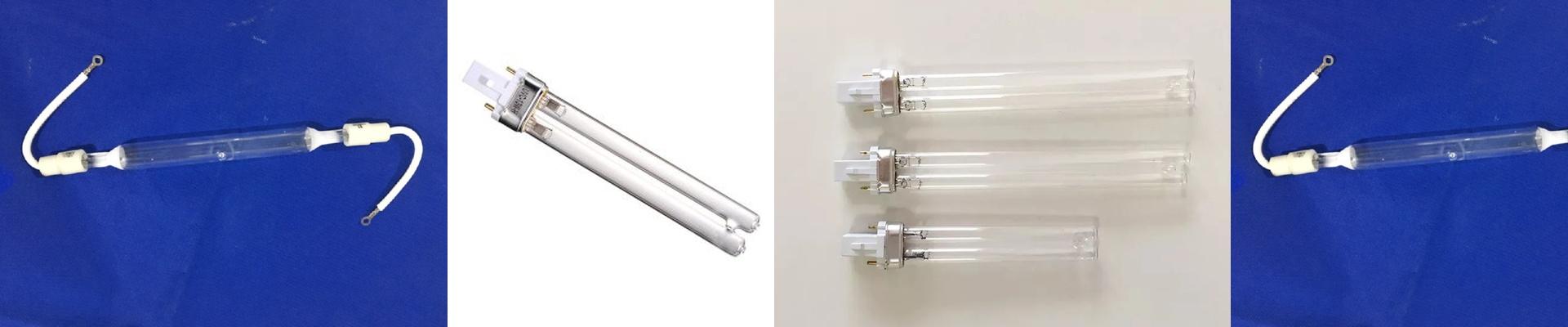
On a high-speed garment line, throughput is the whole game—and it doesn’t negotiate. Every second you spend waiting for ink to dry is a second that turns into scrap, rework, and stops on the floor. In UV-based garment decoration—especially when you’re running hundreds of meters per minute—custom UV lamps aren’t an add-on. They’re the control point for true second-level curing. If the lamp isn’t matched to the ink chemistry, the press runs nervous: incomplete cross-linking, a tacky surface, and color shift once the printed sheets stack. That means lost cycles and quality that drifts from run to run. So the real, operational question is simple: how do you make curing a repeatable step that keeps up with the press, instead of the bottleneck that slows it down? You engineer the UV source—its spectral output, energy density, and stability—around the ink and the line speed.
What matters, technically
UV LED curing is photochemical, not thermal. The lamp’s job is to deliver photons at the wavelengths the ink’s photoinitiators actually absorb, with enough peak irradiance to drive cross-linking in whatever dwell time the line gives you.
- **Wavelength selection:**For most UV flexo and screen inks on textiles, 365nm and 385nm do the heavy lifting. 365nm brings higher photon energy and a faster surface cure. 385nm gives deeper penetration and better through-cure, especially on pigmented systems. 405nm is typically for formulations tuned to longer wavelengths. Custom UV LED curing lamps let you pick the dominant wavelength that fits the ink’s photoinitiator package, instead of forcing the ink to bend itself around a fixed lamp spectrum.
- **Peak irradiance and power density:**Curing speed comes down to peak irradiance (mW/cm²) at the substrate surface. On a high-speed line, dwell under the lamp is measured in milliseconds. To get second-level curing inside that window, the system has to deliver high power density across a tightly controlled emitting area. We design UV LED modules to hit repeatable peak irradiance values, so the delivered energy density (mJ/cm²) is enough for full cross-linking—even when line speed leaves very little exposure time.
- **Curing speed and energy density:**What matters in practice is energy density at the substrate: irradiance × exposure time. If your press runs at 100 m/min, dwell under a given curing zone is short. The lamp has to make up for that by increasing irradiance, not heat. A custom UV LED system lets you match the required energy density to ink film thickness, pigment load, and line speed, so the ink cures right after impression. Then you can stack, fold, and move straight into downstream finishing.
- **Optical stability and spectral control:**Inline curing needs stable output. If intensity fluctuates or the spectrum drifts, cure becomes variable—and you’ll see it as inconsistency in gloss, adhesion, and durability. We hold output stability with closed-loop thermal management and stable drive electronics. Spectral output stays within tight tolerances over the life of the module, so the press setting you dial in at start-up is still the setting you get at the end of the shift.
- **Lamp life and output degradation:**UV LED performance comes down to the degradation curve. Traditional mercury lamps are notorious for rapid output decay and end-of-life instability. UV LED modules deliver long life with a gradual, predictable decline. We design for tens of thousands of hours, with output curves that keep irradiance consistent over time. In real terms, that means fewer lamp changes, less maintenance downtime, and curing that stays stable across production campaigns.
- **Reflector efficiency and spot uniformity:**The optics define the dose. A well-engineered reflector with dichroic coatings increases the fraction of emitted photons that actually reach the substrate and cuts wasted energy. Uniformity across the cure width prevents streaks and edge-to-center differences. With custom lamps, you can tune reflector geometry and coatings for the print width, substrate path, and the intensity profile you need.
- **Energy efficiency and thermal behavior:**UV LED systems turn electrical power into UV output without roasting the substrate—big news on heat-sensitive textiles. System efficiency lowers energy consumption compared to mercury-based curing, and the heat is pulled out through dedicated heat sinks and fans. The payoff is lower electricity draw, less cooling load, and no warping of lightweight fabrics.
- **Ozone-free operation:**UV LED sources emit at wavelengths that don’t generate significant ozone. That simplifies ventilation and improves the working environment. It also protects sensitive components near the cure zone from oxidative stress.
Why this works in high-speed apparel printing
Apparel printing is all about speed, fast changeovers, and tight tolerances. The press is built to run fast. The curing system has to keep up. Second-level curing is the difference between a line that flows and a line that waits. When the lamp delivers enough energy density in the time the substrate spends under the beam, the ink cures on the spot. That means you can handle the work immediately—stacking, folding, heat setting, or packaging—without off-gassing, blocking, or smudging. Immediate cross-linking also improves color stability and dot definition because the ink doesn’t spread after impression. Customization makes that happen because the lamp is matched to the press geometry and the ink system. Emitting width, focal distance, and irradiance profile are engineered to fit the substrate path. Wavelength is chosen to match photoinitiator absorption. The control system is tied to press speed so dose stays consistent when line speed changes. The result is curing that tracks the press, instead of fighting it. That translates straight into capacity. When curing stops being the limiting step, the press can run at its rated speed without slowing down to avoid under-cure. Cycle times drop. Rework from tackiness and set-off drops. And the line runs more consistently across shifts, operators, and ink batches. Energy and maintenance also fall into place. UV LED modules draw less power than mercury systems for the same output, and there’s no warm-up time. No bulbs to replace on a schedule. No shutters, no high-voltage ignition, no mercury disposal. Operational overhead goes down, and uptime goes up.
The practical details you can’t skip
A UV LED curing lamp isn’t a bolt-on. It’s part of the press’s curing loop. If you want the performance you’re after, you have to design for the real constraints on the floor.
- **Ink and photoinitiator compatibility:**UV LED curing performs best when the ink is formulated for LED wavelengths. If your current inks are tuned for mercury lamps, you can end up with slower cure or incomplete surface cure. Work with your ink supplier to match the photoinitiator package to the LED’s dominant wavelength. Get that match, and you’ll see faster cure, lower energy, and stable output. Miss it, and performance will disappoint.
- **Integration and mounting:**The lamp has to be mounted at the correct working distance and aligned to the substrate path. Change the distance, and irradiance shifts in ways that aren’t linear. The optics, substrate, and curing window need a rigid geometry. Vibration, misalignment, and drift will eat uniformity and dose. Plan the mounting for repeatability—and for easy access when maintenance is due.
- **Thermal management and airflow:**UV LEDs generate heat at the module level, and that heat has to be removed reliably. If airflow gets blocked or fans fail, you’ll see thermal roll-off—irradiance drops, and module life shortens. Keep airflow paths clean, monitor fan status, and keep the operating environment within the module’s temperature limits.
- **Power supply and drive stability:**Stable drive current is non-negotiable. Noise and ripple on the power bus become output ripple, and that shows up as curing variation. Use clean power, proper grounding, and shielded cabling. If your press runs variable speed profiles, the lamp driver has to hold current regulation across the whole range.
- **Substrate and reflectance effects:**Dark fabrics absorb more light; light fabrics reflect more. The ink layer itself may be translucent or heavily pigmented. All of that changes the effective dose at the ink surface. Measure dose with a spectral radiometer at the substrate plane, not at the lamp. Then tune power and exposure to the actual ink film and substrate combination.
- **Safety and EMI:**UV light is hazardous to eyes and skin. Shield the cure zone and use interlocks. UV LED drivers can generate EMI—route and shield cables so you don’t interfere with encoders and sensors. If you’re running a high-speed apparel line, the question isn’t whether you need UV curing. It’s whether your curing system is engineered around the press as it actually runs. Customized UV LED curing lamps give you the spectral output, irradiance, and stability required to make curing a predictable, second-level process. That predictability is what opens up capacity and cuts variability—without leaning on heat, long warm-ups, or constant lamp changes.